The Ultimate Tax Deductions for Freelancers: 2026 Rideshare Driver Guide
As we navigate the tax landscape of 2026, the rideshare industry remains a cornerstone of the gig economy. For Uber and Lyft drivers looking for tax deductions for freelancers, the “gig” is a legitimate business in the eyes of the IRS. With new legislative shifts like the One Big Beautiful Bill Act (OBBBA) influencing how independent contractors report income, staying compliant while maximizing your take-home pay has never been more complex.
At ProTaxMasters, we see thousands of drivers overpaying their taxes simply because they don’t treat their vehicle as a mobile office.
Whether you are a full-time driver or just picking up shifts on the weekends, this guide will walk you through the essential tax requirements for 2026.
The Foundation: You Are a Small Business Owner
The most important thing to realize is that you are not an employee of Uber or Lyft. You are an independent contractor. This means that taxes are not withheld from your earnings. You are responsible for paying both the employer and employee portions of Social Security and Medicare taxes, commonly known as self-employment tax.
Failure to understand this distinction often leads to a massive tax bill in April. By treating your rideshare activity as a professional enterprise, you can leverage deductions that the average W-2 employee cannot access.

1. The 2026 Mileage Deduction: 72.5 Cents per Mile
For 2026, the IRS has set the standard mileage rate at 72.5 cents per mile. This is one of the most powerful tools in your tax arsenal. Because it covers gas, insurance, repairs, and depreciation, it often results in a larger deduction than tracking actual expenses.
Key Rules for Mileage Tracking:
- The “On-the-Clock” Rule: You can deduct miles driven while waiting for a request, miles driven to pick up a passenger, and miles driven during a trip.
- Commuting is Not Deductible: The miles you drive from your house to the “starting point” of your shift (or back home at the end) are generally considered commuting miles and are not deductible.
- Documentation is Mandatory: The OBBBA has tightened enforcement regarding mileage logs. The IRS no longer accepts “estimates.” You must have a contemporaneous log (a digital or physical record made at the time of the drive) showing the date, the purpose of the trip, and the mileage.
Pro Tip: If you rent a car to drive for a rideshare service, you cannot use the standard mileage deduction. Instead, you must deduct the actual expenses of the rental and the gas you paid for.
2. Actual Expenses vs. Standard Mileage
While most drivers choose the mileage rate, some: especially those driving newer, high-maintenance luxury vehicles for services like Uber Black: may find that deducting actual expenses is more beneficial.
Actual expenses include:
- Gasoline and oil changes
- Tires and routine maintenance
- Vehicle insurance and registration fees
- Lease payments (if leasing)
- Depreciation (if you own the car)
Warning: If you choose the “actual expense” method in the first year you use your car for business, you are stuck with it for as long as you use that car. If you use the standard mileage rate in the first year, you can switch between the two methods in subsequent years.
3. Tax Deductions for Freelancers Beyond the Car
Many drivers forget that their car isn’t their only business expense. To lower your taxable income, you should be tracking every dollar spent to facilitate your rideshare business.
- Passenger Amenities: Do you provide bottled water, snacks, or gum? These are 100% deductible as business expenses.
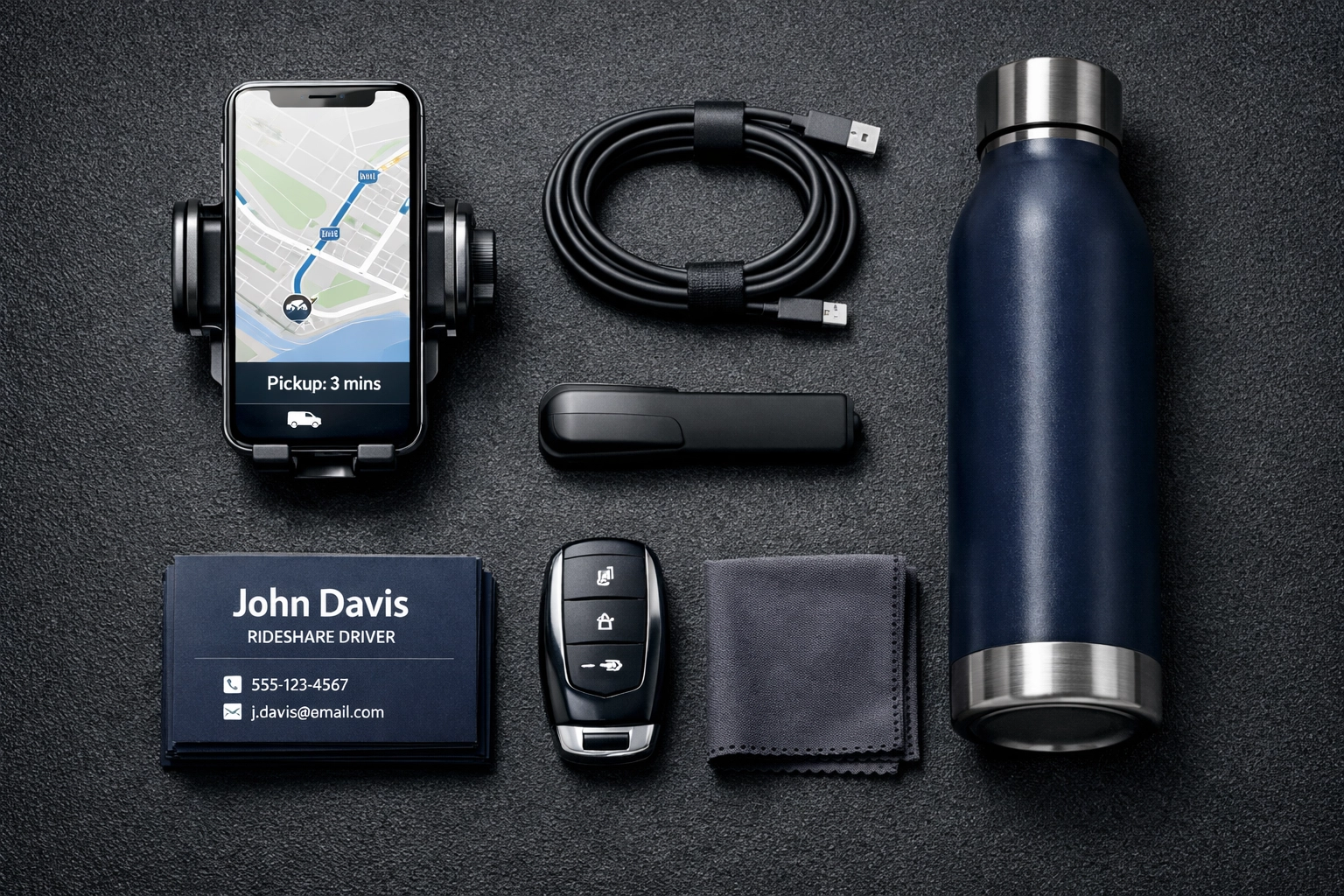
- Electronics: Your smartphone is your storefront. You can deduct the business-use percentage of your phone bill and the cost of chargers, mounts, and dash cams.
- Cleaning: Regular car washes and interior detailing are essential for high ratings and are fully deductible.
- Software and Fees: The commission fees that Uber and Lyft take out of your gross earnings are deductible. Additionally, if you use a mileage tracking app or tax software, those costs are deductible on your Schedule C.
4. Understanding Your 2026 Tax Documents
By January 31, 2026, you should receive specific forms from the rideshare platforms. It is a common mistake to look only at your bank deposits, but the IRS looks at the gross numbers reported by the platforms.
- Form 1099-K: You will receive this if you completed at least 200 rides AND earned over $20,000 in gross payments. Note that this form reports the total amount collected from passengers, including the fees the platform kept. You must deduct those platform fees on your tax return to avoid paying tax on money you never actually touched.
- Form 1099-NEC: This form is used to report non-ride income, such as referral bonuses or other incentives, if they exceed $600.
- Tax Summary: Even if you don’t meet the threshold for a 1099-K, the platforms provide an annual summary. This is your primary source of truth for reporting your income on Schedule C.
5. The OBBBA and the “Hobby vs. Business” Trap
The 2026 tax year brings renewed focus on the One Big Beautiful Bill Act (OBBBA). One of the primary focuses of this act is distinguishing between “hobbies” and “businesses.”
If you consistently report a loss on your rideshare taxes for three out of five years, the IRS may reclassify your work as a hobby. If this happens, you lose the ability to deduct expenses against your other income. To prevent this, ensure you are operating in a business-like manner: maintain a separate bank account for your driving income and keep meticulous records.
6. Self-Employment Tax and the QBI Deduction
Because you are your own boss, you are subject to the 15.3% self-employment tax. This covers your contribution to Social Security and Medicare.
However, there is a silver lining: the Qualified Business Income (QBI) Deduction. If your total taxable income is below $203,000 (for single filers) or $406,000 (for married filing jointly), you may be able to deduct up to 20% of your qualified rideshare income directly from your taxable income. This is essentially a “free” deduction that requires no actual spending; you simply have to qualify.
7. Quarterly Estimated Payments: Avoiding Penalties
The IRS operates on a “pay-as-you-go” system. Since you don’t have an employer withholding taxes from your paycheck, you must send money to the IRS throughout the year if you expect to owe more than $1,000.
For the 2026 tax year, the deadlines for estimated payments are:
- April 15, 2026 (for income earned Jan-Mar)
- June 15, 2026 (for income earned Apr-May)
- September 15, 2026 (for income earned Jun-Aug)
- January 15, 2027 (for income earned Sep-Dec)
Failing to make these payments can result in an underpayment penalty. A safe strategy is to set aside 25% of your net income in a high-yield savings account specifically for these quarterly payments.

Common Mistakes to Avoid
- Not Tracking “Dead” Miles: Drivers often stop tracking miles as soon as a passenger gets out. If you are driving toward a “hot zone” or waiting for a new ping, those miles are business miles.
- Co-mingling Funds: Using your personal credit card for gas and car washes makes it incredibly difficult to audit your expenses later. Use a dedicated card for your business.
- Ignoring Bonus Depreciation: If you purchased a vehicle for rideshare in 2026, you may be eligible for bonus depreciation, allowing you to write off a significant portion of the car’s cost in the first year. However, rules are shifting under recent legislation, so consult with a pro before claiming this.
How ProTaxMasters Can Help
Tax season shouldn’t feel like a high-speed chase. At ProTaxMasters, we specialize in helping gig economy professionals navigate the complexities of Schedule C and self-employment taxes. We ensure that you are taking every legal deduction possible: from your dash cam to your 72.5-cent mileage rate: so you can keep more of what you earn on the road.
If you are feeling overwhelmed by the 2026 changes or the implications of the OBBBA, don’t wait until April. Visit us at protaxmasters.com to schedule a consultation. We can help you set up a tracking system that makes filing a breeze.
![[LOGO] ProTaxMasters](https://cdn.marblism.com/eePiRsK7ouR.png)
<LEGAL_DOCUMENT:77bbf991-606a-4b5c-9eb7-9305300c20b4>