September 15 Estimated Tax Deadline: What Taxpayers Should Check Now
With the September 15 estimated tax deadline just one week away, now is an important time for taxpayers to review whether their 2026 federal tax payments are keeping pace with their income.
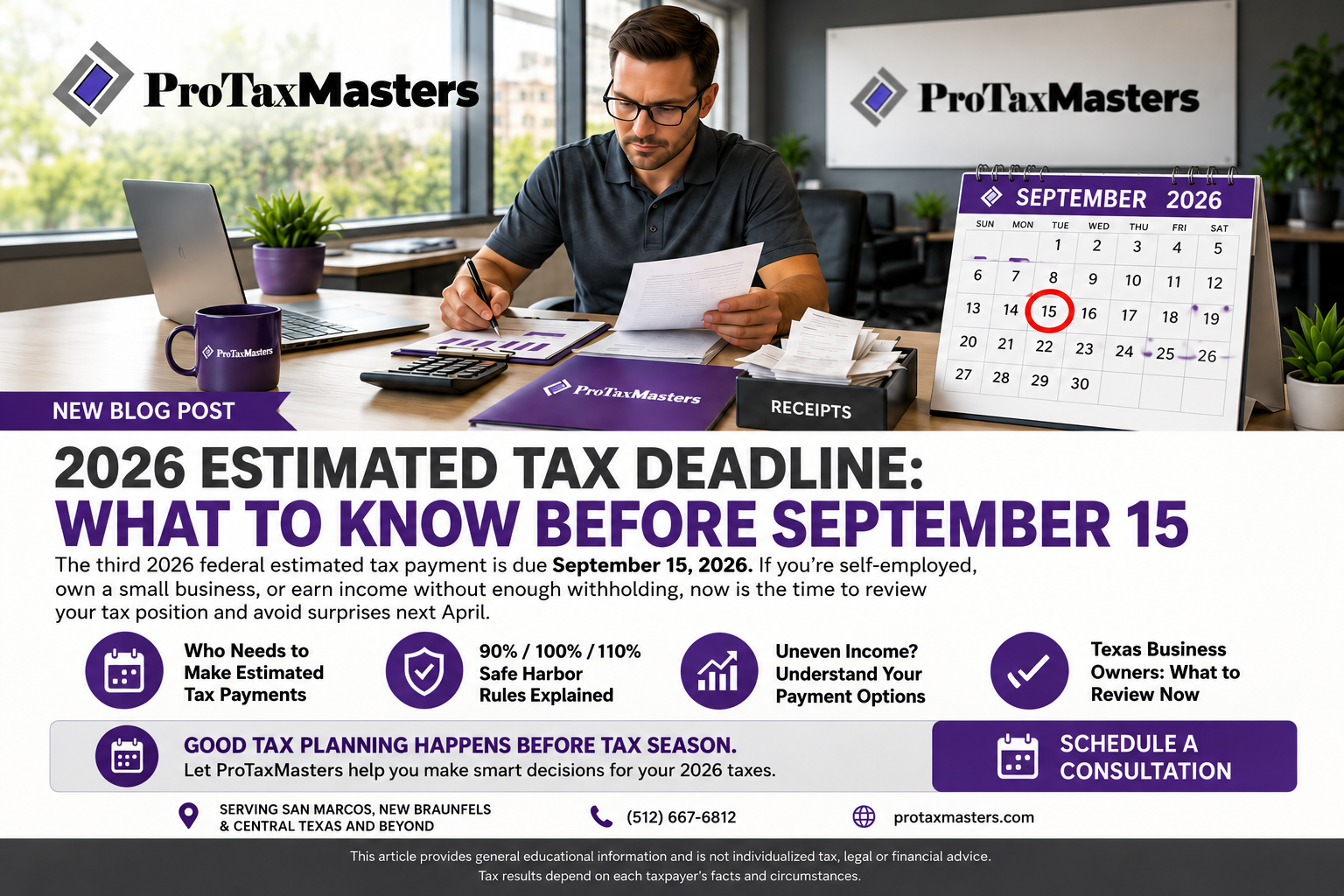
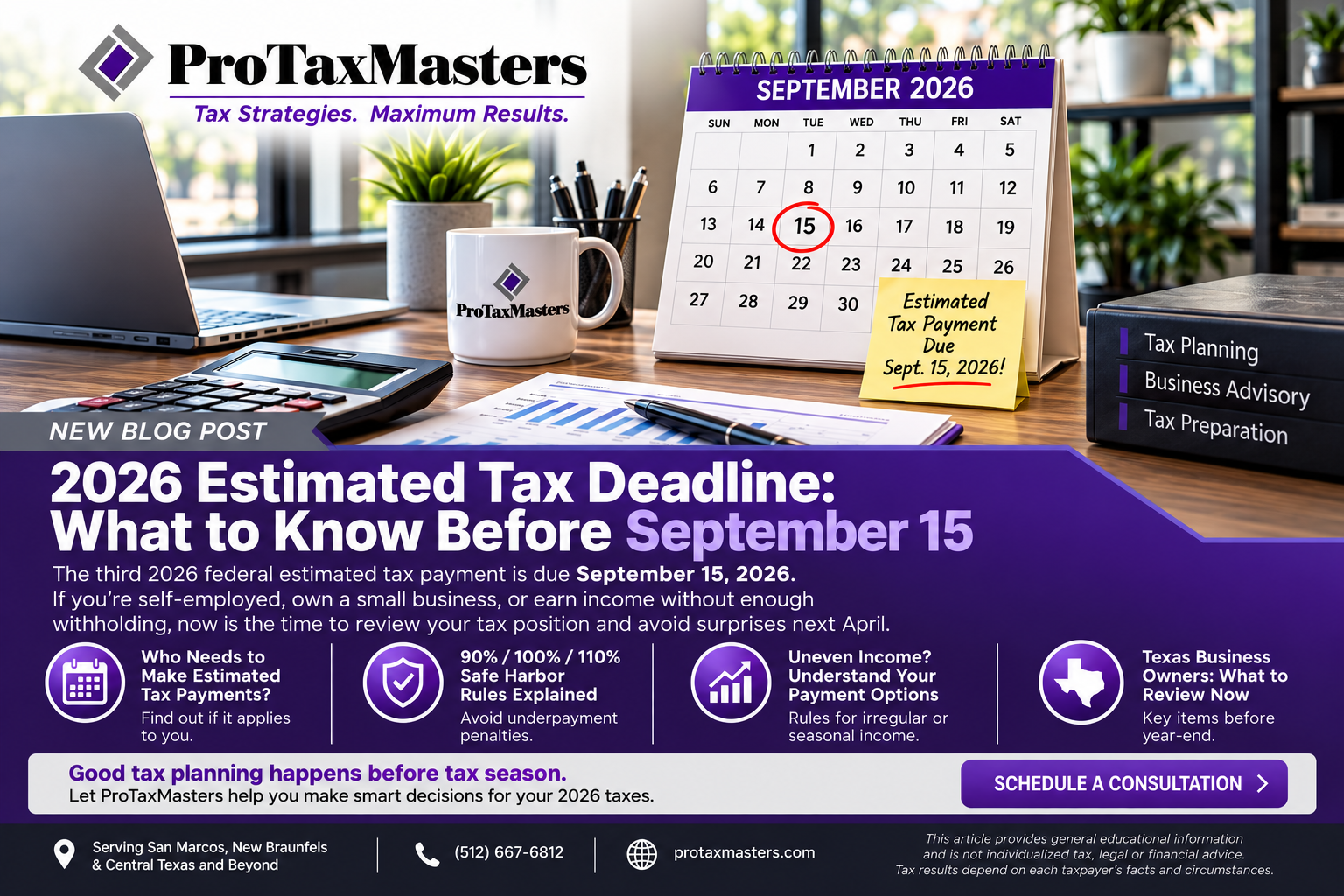
The third estimated-tax payment deadline for 2026 is September 15, 2026. The deadline can affect self-employed individuals, independent contractors, business owners, investors, and others whose income isn’t subject to enough federal income-tax withholding.
September 15 is also an important business filing date: calendar-year partnerships and S corporations that timely requested six-month extensions generally have their extended returns due that day.
For taxpayers in San Marcos and throughout Central Texas, this is a useful time to review the year so far rather than simply sending the same amount paid earlier in the year.
Who May Need to Make Estimated Tax Payments?
Federal income tax generally operates on a pay-as-you-go basis. Employees typically satisfy much of that obligation through paycheck withholding. Taxpayers receiving income without sufficient withholding may instead need estimated-tax payments.
That can include income from self-employment, interest, dividends, rents, capital gains, and other sources. Estimated payments can cover both income tax and, where applicable, self-employment tax.
The key issue isn’t simply whether you’re self-employed. It’s whether the combination of withholding and other tax payments is keeping pace with your expected federal tax liability.
Why September Is a Good Time for a Tax Checkup
A taxpayer’s situation in September may look very different from what was expected in January.
Business income may be higher or lower. Someone may have changed jobs, started a side business, sold an investment, received additional income, or experienced another significant financial change.
The IRS recently reinforced the importance of reviewing withholding after major life or income changes and noted that employees can submit a new Form W-4 when an adjustment is appropriate.
Estimated tax works similarly: when income, deductions, or credits change during the year, the estimated-tax calculation may need to change too. IRS Publication 505 provides guidance for refiguring estimated tax when circumstances change.
What Happens if Estimated Payments Are Too Low?
Taxpayers generally shouldn’t assume that everything can simply be settled when the return is filed.
An estimated-tax underpayment penalty can potentially apply when sufficient tax isn’t paid by the applicable payment-period deadline. The rules contain exceptions and different calculation methods, so whether a penalty actually applies depends on the taxpayer’s individual circumstances.
This is one reason a third-quarter review can be valuable: it provides an opportunity to identify a potential shortfall while there is still time left in the tax year.
Business Owners Have Another September 15 Deadline to Watch
September 15 isn’t only an estimated-tax date.
Calendar-year S corporations that timely requested a six-month filing extension generally have their Form 1120-S due September 15, 2026.
Calendar-year partnerships that timely requested a six-month filing extension generally have their Form 1065 due September 15, 2026.
Business owners should therefore make sure the business return, related Schedule K-1 reporting, and their personal tax planning are being considered together rather than as completely separate issues.
Don’t Forget the October 15 Individual Extension Deadline
Individual taxpayers who received an extension for their 2025 federal income-tax return generally have until October 15, 2026 to file.
An extension to file did not extend the original deadline to pay tax due.
That makes September particularly useful for taxpayers who have both an unfinished 2025 return and 2026 estimated-tax obligations. Completing the prior-year return can provide important information for evaluating the current year’s tax position.
A Better Question Than “How Much Did I Pay Last Quarter?”
Tax planning shouldn’t necessarily consist of repeating the previous payment.
A more useful review asks:
- What has actually happened to income so far in 2026?
- Has business profit changed materially?
- Has wage withholding changed?
- Were there significant investment gains or other income?
- Have deductions, credits, or personal circumstances changed?
- Is the current combination of withholding and estimated payments appropriate?
For some taxpayers, the answer may be that no adjustment is needed. For others, September can reveal an issue that is easier to address now than during filing season.
Need Help Reviewing Your 2026 Tax Position?
ProTaxMasters LLC helps individuals and small-business owners evaluate estimated taxes, withholding, and year-round tax planning—not simply prepare a return after the year is over.
If your income has changed, you started or expanded a business, you’re unsure whether your estimated payments are on track, or you’re approaching an extension deadline, contact ProTaxMasters to schedule a consultation.
This article provides general educational tax information and is not individualized tax advice. Tax consequences depend on each taxpayer’s specific facts and circumstances.