2026 Year-End Tax Planning: 5 Steps for Texas Businesses
2026 year-end tax planning starts with a clear picture of your business—not a last-minute scramble for receipts. Before the holiday rush, Texas small-business owners can take a few practical steps to prepare for the 2027 filing season.
In its October 23, 2026 reminder, the IRS encouraged taxpayers to organize records, review withholding and estimated payments, and use available online tools. For businesses in San Marcos, Kyle, Buda, New Braunfels, Austin and San Antonio, this is a useful time to turn that guidance into a manageable checklist.
1. Bring Your Books Up to Date
Start by reconciling business bank and credit-card accounts through the latest completed month. Match transactions to invoices, receipts and other supporting documents. Identify missing records while the details are still fresh, and separate personal transactions from business expenses.
The IRS explains that good business records help track income and deductible expenses and support the amounts on a tax return. Your accounting software is a starting point; supporting documents still matter. Organize digital files by year and expense type so they are easy to retrieve.
2. Compare Tax Payments With Your Current Income
A strong sales year can change your tax picture. Review year-to-date profit, expected income for the rest of 2026, and federal tax payments already made. A payment amount based on last year’s business may need another look if your income has changed.
Federal taxes generally must be paid as income is earned. The IRS notes that estimated tax payments can cover income tax and self-employment tax. Paying too little—or paying late—may create a penalty even when a taxpayer eventually receives a refund. Ask Michael Garcia, EA, at ProTaxMasters to review your situation rather than assuming one payment at filing time will resolve every shortfall.
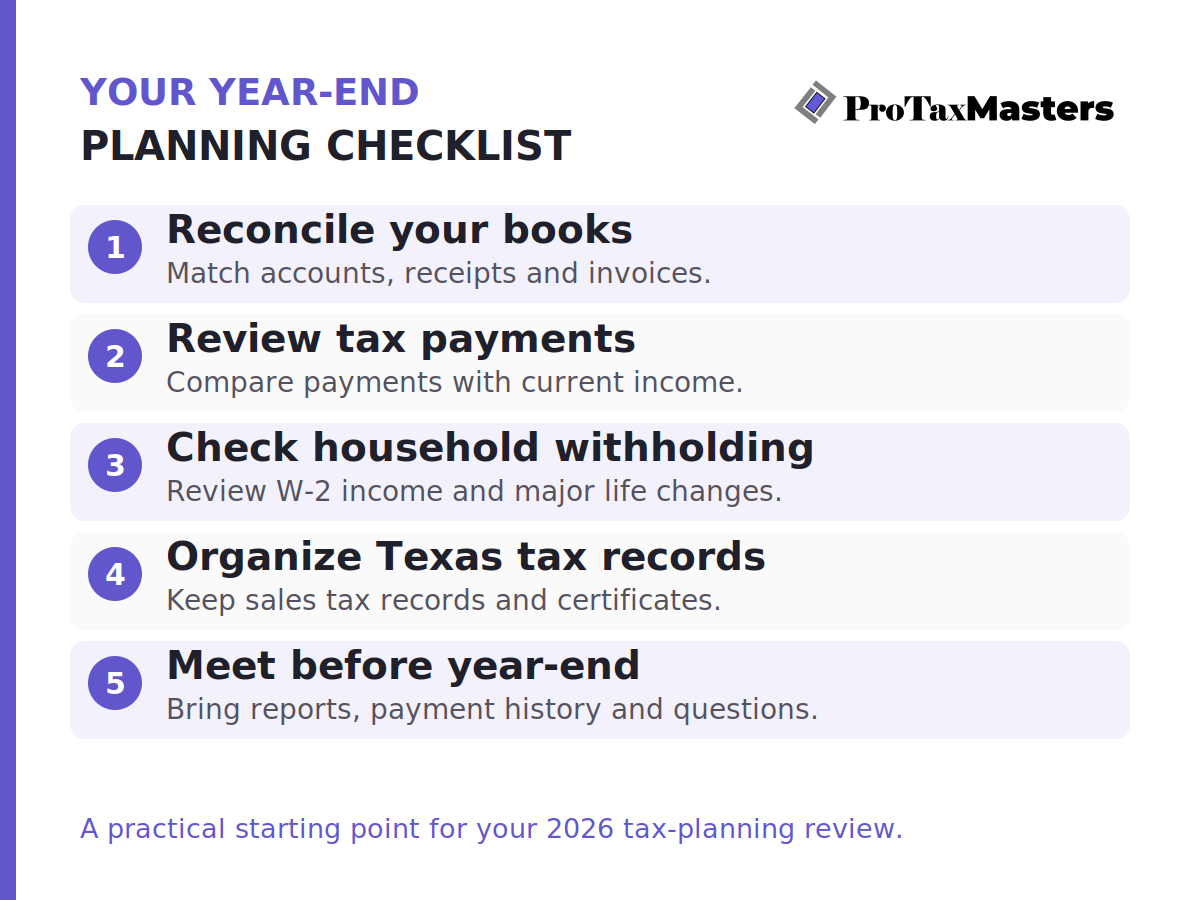
3. Check Household Withholding, Too
If you or your spouse also receives W-2 wages, review household withholding alongside business income. A new job, marriage, a child or a major income change can affect the result.
The IRS Tax Withholding Estimator is available to people with a W-2 job or a pension or annuity with federal withholding. Have recent pay statements, your latest return and records of other income ready. Depending on the result, you may need to give your employer an updated Form W-4. A midyear adjustment may also need another review for the following year.
4. Keep Texas Sales Tax Records Together
If your business has Texas sales and use tax responsibilities, keep those records in the same year-end review process. Gather sales reports, purchases, filed returns and any resale or exemption certificates supporting untaxed sales.
The Texas Comptroller’s recordkeeping guidance generally requires sales and use tax records to be kept for at least four years. Records involved in an audit or related dispute may need to be retained longer. Do not treat that four-year rule as a universal retention period for every federal or business document.
5. Book a Planning Conversation Before Year-End
Bring your updated profit-and-loss report, payment history and questions to a tax-planning meeting. Flag planned equipment purchases, retirement contributions, staffing changes and major personal events for review before acting. The right timing and tax treatment depend on your business structure, accounting method and circumstances.
For example, a Kyle service-business owner with higher profits and a spouse who changed jobs should review both estimated payments and household withholding. This is a planning illustration, not a calculation of what that household owes.
Make 2026 Year-End Tax Planning Manageable
Choose one step to finish this week, then set aside time for the next. Accurate records and an early conversation can give you a clearer view of the decisions still ahead.
ProTaxMasters LLC helps individuals and small-business owners with tax preparation, bookkeeping and tax planning across Central Texas and remotely.
Schedule your complimentary 30-minute initial consultation at ProTaxMasters.com.
This article provides general tax information and is not individualized tax advice. Tax obligations and planning opportunities depend on your facts and circumstances.