Why Year-Round Tax Planning Will Change the Way You Manage Your Small Business
For many small business owners, the month of April brings a familiar sense of dread. It is often characterized by a frantic scramble for receipts, late nights spent hunched over spreadsheets, and the unpleasant surprise of a tax bill that is much higher than anticipated. But what if tax season didn't have to be a season at all?
At ProTaxMasters, we believe that the secret to long-term financial health and peace of mind lies in shifting your mindset. Moving from reactive tax filing to proactive, year-round tax planning for small business growth is more than just a convenience: it is a strategic advantage. When you integrate tax strategy into your monthly or quarterly financial management, you transform your tax return from a source of stress into a tool for business optimization.
The Pitfalls of the "Tax Season" Mindset
Waiting until the end of the year to think about your taxes is like trying to change the oil in your car while you are already driving 70 miles per hour on the highway. By the time March rolls around, most of the strategic moves you could have made to lower your liability are already off the table.
Reactive filing often leads to:
- Missed Deductions: Without a system to track expenses in real-time, valuable write-offs are easily forgotten.
- Cash Flow Crises: A surprise tax bill can deplete your operating capital, forcing you to delay hires or equipment purchases.
- Increased Penalty Risks: Missing estimated payments or filing deadlines can result in costly interest and late fees.

The Strategic Benefits of Proactive Planning
Strategic tax planning is an ongoing conversation between you and your tax professional. It involves looking at your business operations through a financial lens every single month. Here is how this shift in perspective changes the way you lead your company.
1. Enhanced Cash Flow Management
When you plan throughout the year, you always know exactly what you owe. By calculating your estimated tax liability quarterly, you can set aside the necessary funds incrementally. This ensures that when the filing deadline arrives, the money is already there, allowing you to maintain a steady cash flow for your daily operations.
2. Maximizing 2026 Specific Deductions
The tax landscape is constantly evolving. As of 2026, several key provisions have shifted that require a proactive approach to maximize:
- Section 179 Expansion: In 2026, the Section 179 deduction limit has expanded significantly to $2.56 million. This allows businesses to deduct the full purchase price of qualifying equipment and software purchased or financed during the tax year. However, to benefit, the equipment must be put into service before December 31st.
- The Permanence of QBI: The Qualified Business Income (QBI) deduction, which allows eligible pass-through business owners to deduct up to 20% of their qualified business income, is now a permanent fixture of the tax code. Navigating the wage and property limits associated with this deduction requires careful, ongoing monitoring of your payroll and asset base.
3. Strategic Entity Structure Reviews
As your business grows, the legal structure you chose at launch may no longer be the most tax-efficient. For many profitable small businesses, an S-Corporation election can offer meaningful savings on self-employment taxes. Year-round planning allows us to review your profitability and determine if a change in entity status could save you thousands of dollars in the coming year.

Navigating the 2026 Tax Calendar
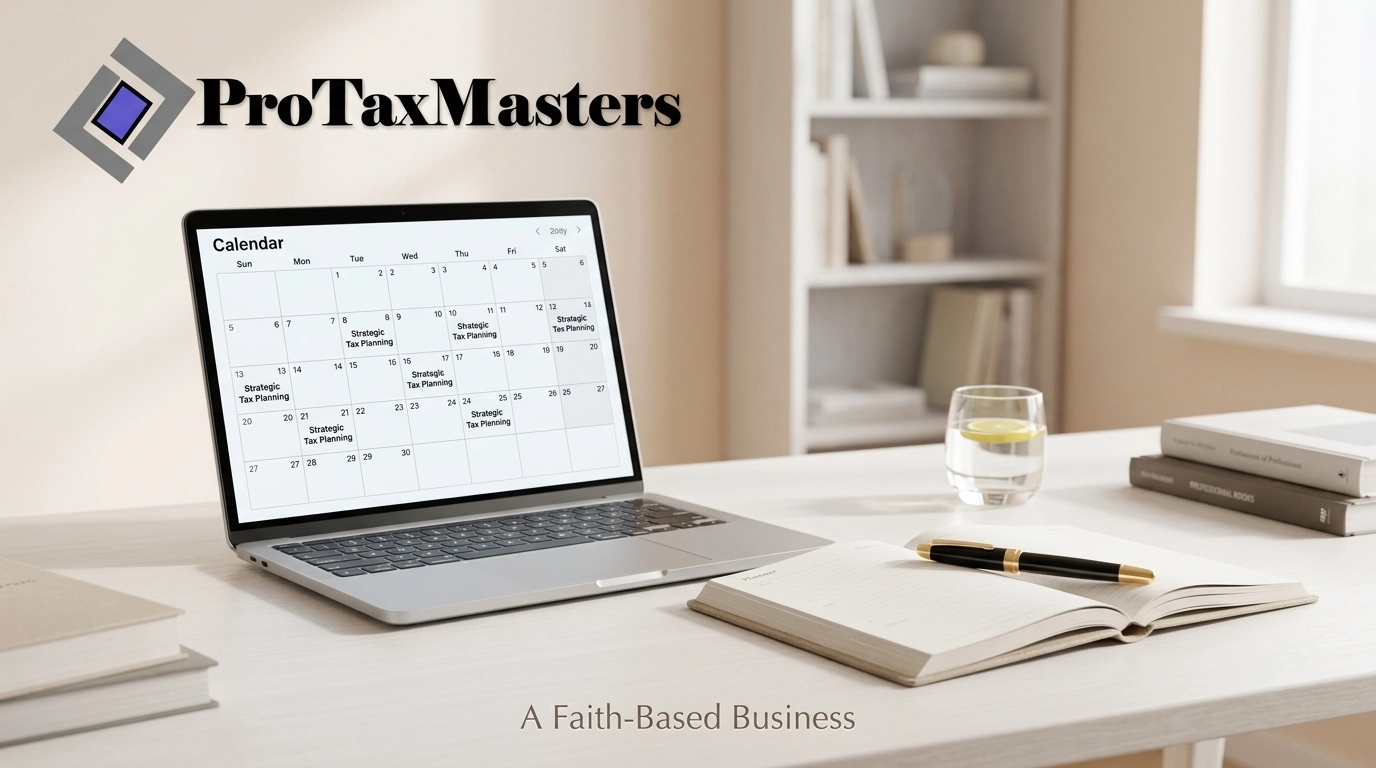
Compliance is the foundation of peace of mind. A major benefit of engaging in ongoing tax preparation services is staying ahead of the IRS calendar. Missing these dates can be expensive for any small business.
Critical Filing Deadlines
- March 15, 2026: Deadline for S-Corporation (Form 1120-S) and Partnership (Form 1065) tax returns.
- April 15, 2026: Deadline for Individual Income Tax Returns (Form 1040) and C-Corporation Returns (Form 1120).
- Quarterly Estimated Payments: To avoid underpayment penalties, businesses must submit estimated payments by the 15th of April, June, September, and January.
By working with an expert consultant throughout the year, these dates become mere milestones rather than emergencies. We ensure your records are organized and your payments are accurate well before the clock runs out.
Why ProTaxMasters is the Right Partner for Your Growth
At ProTaxMasters, we do more than just fill out forms. As a faith-based business, we are committed to providing structured, precise, and trustworthy financial support that allows you to focus on your calling. We offer comprehensive bookkeeping and tax consulting services designed to scale with your business.

Our approach is built on three pillars:
- Accuracy: We pride ourselves on the precision of our work, ensuring you are in full compliance with the latest federal and state laws.
- Timeliness: We proactively manage your calendar so you never have to worry about a missed deadline again.
- Peace of Mind: Knowing that your financial house is in order allows you to sleep better and lead more effectively.
Take Control of Your Financial Future
The most successful small business owners don't view tax planning as a once-a-year chore; they view it as a competitive advantage. By partnering with a dedicated tax professional for year-round support, you can stop reacting to the IRS and start steering your business toward greater profitability.
Are you ready to stop the "tax season" cycle of stress? Contact ProTaxMasters today to schedule a consultation and learn how our strategic tax planning for small business can transform your bottom line.
Click Here to Schedule Your Strategy Session with ProTaxMasters
Official Legal Disclaimer
IRS Circular 230 Disclosure: To ensure compliance with requirements imposed by the IRS, we inform you that any U.S. federal tax advice contained in this communication (including any attachments) is not intended or written to be used, and cannot be used, for the purpose of (i) avoiding penalties under the Internal Revenue Code or (ii) promoting, marketing or recommending to another party any transaction or matter addressed herein.
FinCEN BOI Reporting: As of 2026, domestic reporting companies are exempt from Beneficial Ownership Information (BOI) reporting under current FinCEN rules and applicable court and regulatory developments. Certain foreign entities that meet the definition of a reporting company may still have BOI filing obligations. Because BOI rules can change and entity-specific facts matter, ProTaxMasters provides general information only and encourages business owners to consult qualified legal counsel regarding their specific compliance obligations.
Bonus Depreciation Notice: Tax laws regarding bonus depreciation are subject to change and phase-outs based on the year property is placed in service. The availability and percentage of bonus depreciation can significantly impact your tax liability and should be discussed with a qualified tax specialist during the planning phase of any major capital expenditure.
No Professional-Client Relationship: The information provided in this blog post is for general educational purposes only and does not constitute professional tax, legal, or financial advice. Accessing or consuming this content does not create a professional-client relationship between the reader and ProTaxMasters. You should consult with a qualified tax professional regarding your unique financial situation before making any business or tax-related decisions.